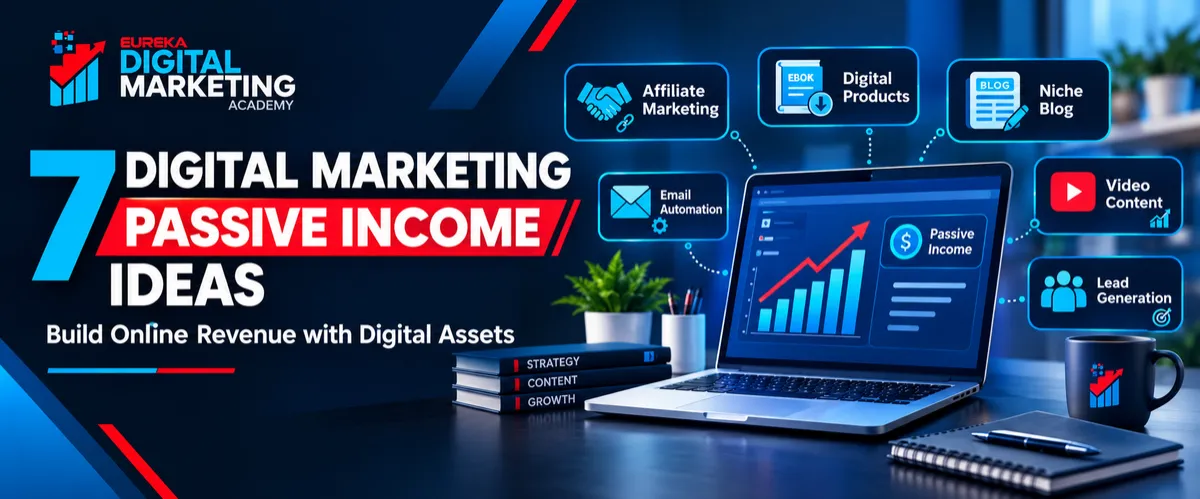
Digital Marketing Passive Income Ideas: 7 Ways to Build Online Revenue
Building an online income stream does not always mean exchanging your time directly for money. With the right strategy, digital marketing passive income ideas can help you create online assets that continue generating revenue after the initial work has been completed.
From affiliate websites and digital products to online courses, content monetization, and automated email funnels, digital marketing provides several opportunities to build scalable online revenue.
However, passive income does not usually mean completely effortless income. Most successful online income models require research, content creation, marketing, optimization, and ongoing maintenance.
In this guide, we will explore 7 digital marketing passive income ideas, how each model works, what skills you need, and how you can start building an online revenue stream.
What Is Digital Marketing Passive Income?
Digital marketing passive income refers to revenue generated through online marketing assets, content, products, or systems that can continue producing income with less direct involvement after the initial setup.
Examples include:
Affiliate marketing websites
Digital products
Online courses
Monetized blogs
Email marketing funnels
YouTube and video content
Lead-generation websites
The amount of ongoing work varies depending on the business model. For example, a blog may require regular content updates, while an automated email funnel may need occasional optimization.
The goal is to build a system where your marketing efforts can continue attracting visitors, leads, customers, or commissions over time.
1. Build an Affiliate Marketing Website
Affiliate marketing is one of the most popular ways to create potential passive income online.
With affiliate marketing, you recommend products or services from other companies. When someone makes a qualifying purchase or completes an action through your affiliate link, you can receive a commission according to the affiliate program's terms.
A typical affiliate marketing process looks like this:
Create useful content → Attract targeted traffic → Recommend relevant products → Generate affiliate commissions
You can build an affiliate website around a specific niche and publish content such as:
Product reviews
Comparison articles
Buying guides
Tutorials
Best-product lists
Educational content
SEO can be particularly useful because search traffic can continue bringing visitors to useful content after it has been published.
If you want to understand this business model more clearly, explore Affiliate Marketing vs Influencer Marketing to understand how different online monetization approaches work.
How to Make Affiliate Marketing More Sustainable
Focus on:
Choosing a specific niche
Researching relevant keywords
Creating useful content
Building topical authority
Recommending relevant products
Updating outdated articles
Tracking conversions
Affiliate marketing is not guaranteed passive income. Search rankings, audience behavior, competition, and affiliate program terms can change, so ongoing optimization is important.
2. Create and Sell Digital Products
Creating digital products is another strong online passive income idea.
Unlike physical products, digital products can be delivered electronically without inventory, packaging, or shipping.
Examples include:
Ebooks
Templates
Checklists
Spreadsheets
Marketing planners
SEO templates
Social media calendars
Digital guides
Downloadable resources
For example, a digital marketer could create an SEO keyword research template for small businesses.
Once the product is created, digital marketing can be used to attract potential buyers through search engines, social media, email marketing, and paid advertising.
How to Sell Digital Products
A basic process can look like this:
Identify a specific audience.
Find a problem they need to solve.
Create a useful digital product.
Build a landing page.
Promote the product through content and marketing.
Automate delivery and customer communication.
The most important factor is solving a real problem rather than creating a product simply because it is easy to produce.
3. Build and Monetize a Niche Blog
A niche blog can become a long-term digital asset when it consistently attracts a targeted audience.
You can create content around a specific topic and monetize the website through:
Display advertising
Affiliate marketing
Sponsored content
Digital products
Lead generation
Consulting
Online courses
SEO plays an important role in this model because targeted organic traffic can bring visitors without paying for every click.
For example, a website about digital marketing could publish content around SEO, PPC, social media, email marketing, content strategy, and online business.
Understanding content marketing strategy for beginners can help you develop a content system that attracts and educates your target audience.
Why Niche Websites Can Become Digital Assets
A successful website can contain hundreds of useful pages that continue attracting search traffic over time.
However, search algorithms, competitors, and user expectations change. Therefore, a profitable website usually requires regular content updates and SEO maintenance.
4. Create an Online Course
If you have expertise in a specific subject, you can package your knowledge into an online course.
Online courses can generate revenue repeatedly because the same educational material can be sold to multiple students.
Possible course topics include:
SEO
Social media marketing
Content marketing
Google Ads
Email marketing
Website development
Graphic design
Business skills
For example, someone with strong SEO knowledge could create a beginner course covering keyword research, on-page SEO, technical SEO, content optimization, and SEO analytics.
How Digital Marketing Helps Sell Courses
You can attract students through:
SEO content
YouTube videos
Social media
Email newsletters
Webinars
Lead magnets
Paid advertising
The course itself is only one part of the business. You also need a marketing system capable of reaching the right audience.
5. Build an Automated Email Marketing Funnel
Email marketing can become a powerful component of a passive income strategy when parts of the customer journey are automated.
An automated email funnel can:
Attract a visitor.
Collect their email address.
Deliver useful information.
Build trust.
Recommend a product or service.
Follow up automatically.
For example, you could offer a free SEO checklist in exchange for an email address. After signup, an automated sequence could provide SEO tips and eventually introduce a relevant paid product.
This approach allows businesses to communicate with potential customers without manually sending every message.
For a deeper look at lead generation, see how to use email marketing to generate more leads.
Important Email Marketing Elements
A good automated funnel should include:
A relevant lead magnet
Clear signup forms
Useful email content
Audience segmentation
Automated sequences
Strong calls to action
Performance tracking
Automation saves time, but email campaigns still need monitoring and optimization.
6. Create Monetized Video Content
Video content can also become a long-term digital asset.
Platforms such as YouTube allow creators to publish educational or entertaining content that can continue attracting viewers after publication.
Potential revenue sources include:
Advertising
Affiliate commissions
Sponsorships
Digital products
Online courses
Consulting services
For example, a digital marketing creator could publish tutorials about:
SEO
Google Ads
Social media marketing
Content marketing
Email marketing
Website optimization
Videos that answer specific search queries can continue attracting viewers over time.
How to Build a Video Content Strategy
Focus on:
A specific audience
Searchable topics
Useful educational content
Consistent publishing
Strong titles and thumbnails
Clear calls to action
Video content may require significant effort at the beginning, but a library of useful videos can become a valuable long-term marketing asset.
7. Create a Lead Generation Website
A lead generation website is another digital marketing business model that can potentially generate recurring revenue.
The basic idea is to build a website that attracts people searching for a particular product or service and then connect those prospects with relevant businesses.
For example, a website could target searches related to:
Local home services
Real estate
Education
Business services
Professional services
Digital marketing
The website can attract visitors through SEO and convert them into leads using forms, calls, booking systems, or other conversion methods.
Businesses may then pay for qualified leads depending on the agreed business model.
What Makes Lead Generation Work?
A successful lead-generation website generally needs:
Targeted keywords
Useful landing pages
Local or niche SEO
Strong calls to action
Conversion-focused design
Lead tracking
Reliable business partners
This model combines SEO, content marketing, conversion optimization, and lead generation.
Passive Income vs Active Income in Digital Marketing
It is important to understand the difference between active and passive digital marketing income.
Active IncomeMore Passive-Style IncomeFreelance SEO servicesAffiliate websiteSocial media managementDigital productsPPC managementOnline courseContent writingMonetized blogConsultingAutomated email funnelMarketing agency servicesVideo content library
Active income usually requires direct work for each client or project.
Passive-style income focuses more on building assets that can continue generating revenue after the initial work.
However, most online businesses are semi-passive rather than completely passive. They still require maintenance, marketing, customer support, content updates, and optimization.
How to Choose the Right Passive Income Model
Not every passive income model will be suitable for everyone.
Consider these factors before choosing one:
Your Existing Skills
If you already understand SEO, an affiliate website or niche blog may be easier to start.
If you are good at teaching, an online course may be more suitable.
If you enjoy writing, content marketing and blogging could be a strong starting point.
Your Available Time
Some models require substantial upfront work.
For example, creating an online course may take weeks or months, while starting with affiliate content may allow you to publish gradually.
Your Budget
Some models can be started with relatively low costs, while others require investments in websites, software, advertising, video equipment, or professional services.
Your Target Audience
The more clearly you understand your audience, the easier it becomes to create content and products that solve their problems.
How to Build a Digital Marketing Passive Income Strategy
Instead of trying seven models simultaneously, start with one.
Step 1: Choose a Niche
Select a topic where you have knowledge, interest, or the ability to develop expertise.
Step 2: Identify a Problem
Find a problem that people actively want to solve.
Step 3: Choose a Monetization Model
Decide whether you want to monetize through:
Affiliate commissions
Digital products
Courses
Advertising
Lead generation
Sponsorships
Step 4: Create Valuable Content
Develop content that answers questions and helps your target audience.
Step 5: Build Organic Traffic
Use keyword research and SEO to attract relevant visitors.
Step 6: Create a Conversion System
Add email signup forms, product pages, affiliate recommendations, or lead forms where appropriate.
Step 7: Automate Repetitive Tasks
Use automation for tasks such as:
Email sequences
Product delivery
Scheduling
Reporting
Lead notifications
Step 8: Measure and Improve
Track traffic, conversions, revenue, engagement, and other relevant metrics.
Use the data to improve your content and marketing strategy.
SEO Skills for Passive Online Income
SEO can be one of the most useful skills when building digital marketing passive income streams.
Organic search can help you attract people who are actively looking for information, products, or services.
Important SEO areas include:
Keyword research
Search intent
On-page SEO
Technical SEO
Content optimization
Internal linking
Backlink strategy
Competitor analysis
SEO analytics
If you are starting your SEO journey, learning practical SEO strategies for building website visibility and organic growth can help you understand how search optimization supports online growth.
Common Mistakes With Passive Income
Many people expect passive income to mean earning money without doing any work.
That expectation can lead to poor decisions.
Avoid these mistakes:
Expecting Overnight Results
Most passive-style online businesses take time to build traffic, trust, and revenue.
Creating Content Without a Strategy
Publishing random articles does not guarantee organic traffic.
Choosing a Niche Only for Money
A profitable niche still requires useful content and expertise.
Ignoring Audience Needs
Your content and products should solve real problems.
Depending on One Traffic Source
Search algorithms, social platforms, and advertising costs can change. Developing multiple acquisition channels can reduce dependency on a single source.
Never Updating Your Assets
Old content can lose rankings or become inaccurate. Regular updates help maintain quality and relevance.
Final Thoughts
These digital marketing passive income ideas can help you build online revenue streams around content, products, audiences, and automated marketing systems.
The seven models covered in this guide include:
Affiliate marketing websites
Digital products
Niche blogs
Online courses
Automated email funnels
Monetized video content
Lead-generation websites
None of these models should be viewed as completely effortless income. The strongest results usually come from combining valuable content, targeted traffic, effective marketing, and consistent optimization.
If you are new to digital marketing, start with one skill and one business model. Build practical experience, understand your target audience, and gradually create systems that can generate revenue without requiring you to exchange every hour directly for money.
For beginners who want to develop practical digital marketing skills before building an online income stream, structured training can provide a foundation in SEO, content marketing, social media, PPC, email marketing, and other essential areas.